火山と鉱物の関係
Volcanoes of the World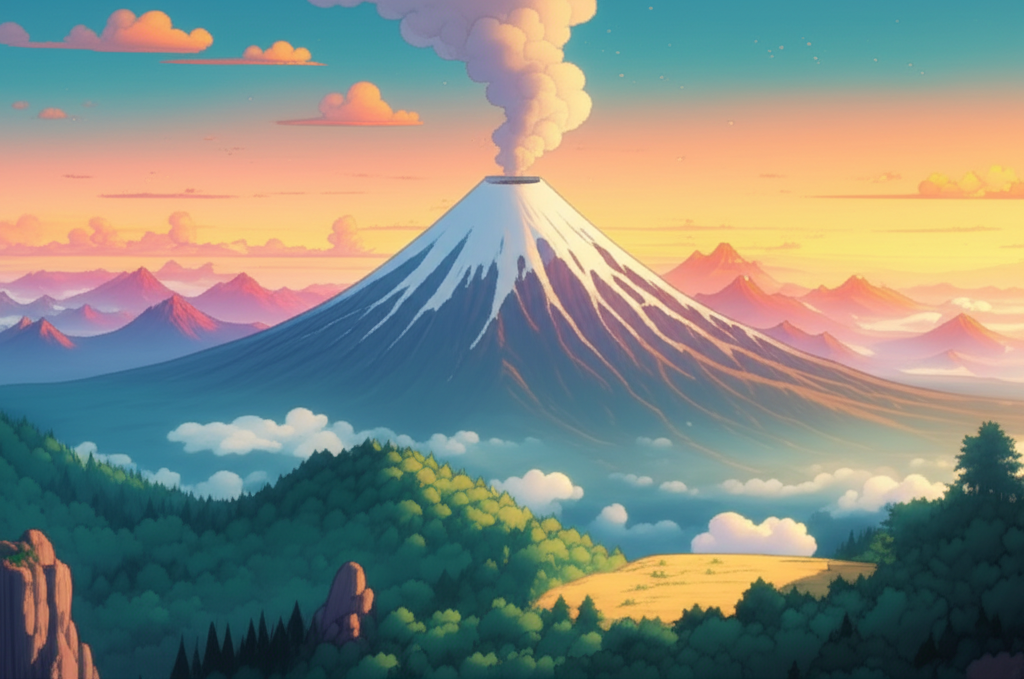
火山は、地下のマグマ(高温の岩石の液体)が地表に出てくる場所です。マグマの成分やねばり気(粘性)によって、火山の形や噴火のしかたが変わります。世界の火山の種類として、まず楯状火山(ハワイ型)は、玄武岩質(鉄やマグネシウムが多い)でさらさらした溶岩が遠くまで流れるため、山体は広く緩やかな傾斜になります。次に成層火山(富士山型)は、火山灰や軽石などの噴出物が積もる爆発的噴火と、溶岩流が重なることで円錐形になりやすく、噴火の危険が多様です。カルデラ火山は、巨大噴火でマグマだまりが空に近くなり、上の地面が陥没して大きな凹地(カルデラ)ができたものです。溶岩ドームは、粘性の高い溶岩(珪酸が多い)が流れにくく、火口付近で盛り上がってドーム状の山になります。
日本は環太平洋火山帯にあり、活火山が約110もあります。特に成層火山が多く、富士山、桜島、浅間山などが代表例です。これは海のプレートが大陸側のプレートの下に沈み込むことで、沈み込んだ側から水がしみ出し、上のマントルの岩石が溶けやすくなってマグマが生まれるためです。火山が多い日本では、地下の熱で湯が温められる温泉や、地熱発電などの資源も豊富です。また、火山灰や軽石、溶岩は冷えて固まると、かんらん石・輝石・斜長石などの鉱物を含むことが多く、火山は「鉱物の宝庫」でもあります。
ゲームではストロンボリ・キラウエア・イエローストーン・エルタ・アレの4つの火山王国が舞台で、火山のタイプやマグマの性質の違いが、産出する鉱物の違いにつながります。たとえば玄武岩質が多い地域では、黒っぽい岩に多い鉱物が目立ち、粘性が高いマグマが関わる地域では別の鉱物や火山灰由来の素材が集まりやすい、という具合です。王国ごとに「鉱物騎士」の特徴が変わり、どの素材を集めて装備や対策を整えるかが攻略の戦略に影響する、という設定は、火山の科学と相性の良いアイデアだと言えます。
日本は環太平洋火山帯にあり、活火山が約110もあります。特に成層火山が多く、富士山、桜島、浅間山などが代表例です。これは海のプレートが大陸側のプレートの下に沈み込むことで、沈み込んだ側から水がしみ出し、上のマントルの岩石が溶けやすくなってマグマが生まれるためです。火山が多い日本では、地下の熱で湯が温められる温泉や、地熱発電などの資源も豊富です。また、火山灰や軽石、溶岩は冷えて固まると、かんらん石・輝石・斜長石などの鉱物を含むことが多く、火山は「鉱物の宝庫」でもあります。
ゲームではストロンボリ・キラウエア・イエローストーン・エルタ・アレの4つの火山王国が舞台で、火山のタイプやマグマの性質の違いが、産出する鉱物の違いにつながります。たとえば玄武岩質が多い地域では、黒っぽい岩に多い鉱物が目立ち、粘性が高いマグマが関わる地域では別の鉱物や火山灰由来の素材が集まりやすい、という具合です。王国ごとに「鉱物騎士」の特徴が変わり、どの素材を集めて装備や対策を整えるかが攻略の戦略に影響する、という設定は、火山の科学と相性の良いアイデアだと言えます。
A volcano is a place where magma (hot, melted rock from deep underground) reaches the Earth's surface. The shape of a volcano and the way it erupts depend on the magma's ingredients and how thick and sticky it is (its viscosity). There are several main types of volcanoes around the world. Shield volcanoes (like those in Hawaii) are built from basaltic lava that is rich in iron and magnesium and flows easily, spreading out over wide areas to form broad, gently sloping mountains. Stratovolcanoes (like Mount Fuji) are built up in layers of volcanic ash, pumice, and lava flows, forming steep cone shapes and producing many different kinds of eruptions. Caldera volcanoes form when a massive eruption empties the magma chamber below, causing the ground above to collapse and create a huge basin-shaped depression called a caldera. Lava domes form when very thick, silica-rich lava cannot flow far and instead piles up near the vent, building a rounded, dome-shaped mound.
Japan sits on the Pacific Ring of Fire and has about 110 active volcanoes. Most of them are stratovolcanoes, with famous examples like Mount Fuji, Sakurajima, and Mount Asama. These volcanoes exist because oceanic plates are diving beneath continental plates in a process called subduction. Water released from the sinking plate lowers the melting point of the rock above it, generating new magma. Because Japan has so many volcanoes, it is also rich in hot springs heated by underground heat, as well as geothermal energy resources. When volcanic ash, pumice, and lava cool and solidify, they often contain minerals such as olivine, pyroxene, and plagioclase, making volcanoes true treasure houses of minerals.
In the Game: The game features four volcanic kingdoms -- Stromboli, Kilauea, Yellowstone, and Erta Ale -- and the differences in volcano type and magma composition lead to different minerals being produced in each. For example, regions dominated by basaltic magma tend to feature dark-colored minerals common in mafic rocks, while regions with thicker, more viscous magma tend to collect different minerals and materials derived from volcanic ash. The characteristics of the "Mineral Knights" change depending on the kingdom, and choosing which materials to gather is a key part of gameplay -- a design that fits naturally with the science of volcanoes.
Japan sits on the Pacific Ring of Fire and has about 110 active volcanoes. Most of them are stratovolcanoes, with famous examples like Mount Fuji, Sakurajima, and Mount Asama. These volcanoes exist because oceanic plates are diving beneath continental plates in a process called subduction. Water released from the sinking plate lowers the melting point of the rock above it, generating new magma. Because Japan has so many volcanoes, it is also rich in hot springs heated by underground heat, as well as geothermal energy resources. When volcanic ash, pumice, and lava cool and solidify, they often contain minerals such as olivine, pyroxene, and plagioclase, making volcanoes true treasure houses of minerals.
In the Game: The game features four volcanic kingdoms -- Stromboli, Kilauea, Yellowstone, and Erta Ale -- and the differences in volcano type and magma composition lead to different minerals being produced in each. For example, regions dominated by basaltic magma tend to feature dark-colored minerals common in mafic rocks, while regions with thicker, more viscous magma tend to collect different minerals and materials derived from volcanic ash. The characteristics of the "Mineral Knights" change depending on the kingdom, and choosing which materials to gather is a key part of gameplay -- a design that fits naturally with the science of volcanoes.
結晶系について
Crystal Systems
結晶系とは、鉱物の結晶を「原子の並び方の規則(対称性)」と「結晶の3本の軸(結晶軸)の長さと交わる角度」で分類したグループです。見た目の形だけでなく、内部の規則性にもとづくため、同じ結晶系の鉱物は似た対称性をもちます。結晶軸は a・b・c の3本で、長さの関係(等しい/違う)と、角度(90°かどうか)で区別します。
等軸晶系:a=b=c、角度はすべて90°。対称性が最も高く、立方体や八面体になりやすい。例:岩塩、黄鉄鉱、ガーネット。
正方晶系:a=b≠c、角度はすべて90°。等軸より一方向に伸びた形になりやすい。例:ジルコン、ルチル、カシテライト(錫石)。
六方晶系:a=b≠c、aとbのなす角は120°、cはそれらに直角。6回回転の対称が特徴。例:石英(高温型)、ベリル、アパタイト。
三方晶系:軸の取り方は六方に似ますが、対称の中心は3回回転(六方ほど高くない)。例:石英(低温型)、方解石、コランダム。
斜方晶系:a≠b≠c、角度はすべて90°。直方体に近いが3方向が全部違う。例:かんらん石、硫黄、トパーズ。
単斜晶系:a≠b≠c、角度は2つが90°で1つだけ90°でない。少し傾いた箱のような対称性。例:石膏、輝石(普通輝石など)、雲母(モスコバイトなど)。
三斜晶系:a≠b≠c、角度もすべて90°ではない。対称性が最も低く、最も「ゆがんだ」格子。例:長石(曹長石・灰長石)、藍晶石。
【ゲームでの活用】この7つを属性として扱うなら、等軸→正方→六方→三方→斜方→単斜→三斜→等軸の順で有利、という「相性の輪」ができます。有利ならダメージ1.5倍、不利なら0.7倍なので、敵の結晶系を見て一つ先の結晶系を当てる編成が基本戦略になります。科学では相性はありませんが、結晶系が"対称性の違い"を表す分類だと知っていると、属性としての個性づけにも納得しやすいでしょう。
等軸晶系:a=b=c、角度はすべて90°。対称性が最も高く、立方体や八面体になりやすい。例:岩塩、黄鉄鉱、ガーネット。
正方晶系:a=b≠c、角度はすべて90°。等軸より一方向に伸びた形になりやすい。例:ジルコン、ルチル、カシテライト(錫石)。
六方晶系:a=b≠c、aとbのなす角は120°、cはそれらに直角。6回回転の対称が特徴。例:石英(高温型)、ベリル、アパタイト。
三方晶系:軸の取り方は六方に似ますが、対称の中心は3回回転(六方ほど高くない)。例:石英(低温型)、方解石、コランダム。
斜方晶系:a≠b≠c、角度はすべて90°。直方体に近いが3方向が全部違う。例:かんらん石、硫黄、トパーズ。
単斜晶系:a≠b≠c、角度は2つが90°で1つだけ90°でない。少し傾いた箱のような対称性。例:石膏、輝石(普通輝石など)、雲母(モスコバイトなど)。
三斜晶系:a≠b≠c、角度もすべて90°ではない。対称性が最も低く、最も「ゆがんだ」格子。例:長石(曹長石・灰長石)、藍晶石。
【ゲームでの活用】この7つを属性として扱うなら、等軸→正方→六方→三方→斜方→単斜→三斜→等軸の順で有利、という「相性の輪」ができます。有利ならダメージ1.5倍、不利なら0.7倍なので、敵の結晶系を見て一つ先の結晶系を当てる編成が基本戦略になります。科学では相性はありませんが、結晶系が"対称性の違い"を表す分類だと知っていると、属性としての個性づけにも納得しやすいでしょう。
A crystal system is a way of grouping mineral crystals based on the symmetry of their atomic arrangement and the lengths and angles of their three crystal axes. The classification is based not just on outward shape, but on the internal regularity of the structure, so minerals in the same crystal system share similar symmetry. The three crystal axes are labeled a, b, and c, and systems are distinguished by whether the axes are equal or unequal in length, and whether the angles between them are 90 degrees or not.
Cubic (Isometric) System: a=b=c, all angles are 90°. This system has the highest symmetry, and crystals tend to form cubes or octahedra. Examples: halite, pyrite, garnet.
Tetragonal System: a=b≠c, all angles are 90°. Crystals tend to be stretched in one direction compared to cubic. Examples: zircon, rutile, cassiterite.
Hexagonal System: a=b≠c, the angle between a and b is 120°, and c is perpendicular. Characterized by 6-fold rotational symmetry. Examples: quartz (high-temperature form), beryl, apatite.
Trigonal System: The axis setup is similar to hexagonal, but the symmetry center is 3-fold rotation. Examples: quartz (low-temperature form), calcite, corundum.
Orthorhombic System: a≠b≠c, all angles are 90°. Similar to a rectangular box with three unequal sides. Examples: olivine, sulfur, topaz.
Monoclinic System: a≠b≠c, two angles are 90° but one is not. Think of a slightly tilted box. Examples: gypsum, pyroxene (augite), mica (muscovite).
Triclinic System: a≠b≠c, and none of the angles are 90°. The lowest symmetry and most "distorted" lattice. Examples: feldspar (albite, anorthite), kyanite.
In the Game: These seven crystal systems form a "compatibility wheel": Cubic → Tetragonal → Hexagonal → Trigonal → Orthorhombic → Monoclinic → Triclinic → Cubic. An advantage means 1.5× damage, while a disadvantage means 0.7×, so the basic strategy is to check the enemy's crystal system and field a mineral one step ahead in the cycle. In real science there are no such matchups, but knowing that crystal systems represent differences in symmetry makes the idea of using them as distinct battle attributes easier to understand.
Cubic (Isometric) System: a=b=c, all angles are 90°. This system has the highest symmetry, and crystals tend to form cubes or octahedra. Examples: halite, pyrite, garnet.
Tetragonal System: a=b≠c, all angles are 90°. Crystals tend to be stretched in one direction compared to cubic. Examples: zircon, rutile, cassiterite.
Hexagonal System: a=b≠c, the angle between a and b is 120°, and c is perpendicular. Characterized by 6-fold rotational symmetry. Examples: quartz (high-temperature form), beryl, apatite.
Trigonal System: The axis setup is similar to hexagonal, but the symmetry center is 3-fold rotation. Examples: quartz (low-temperature form), calcite, corundum.
Orthorhombic System: a≠b≠c, all angles are 90°. Similar to a rectangular box with three unequal sides. Examples: olivine, sulfur, topaz.
Monoclinic System: a≠b≠c, two angles are 90° but one is not. Think of a slightly tilted box. Examples: gypsum, pyroxene (augite), mica (muscovite).
Triclinic System: a≠b≠c, and none of the angles are 90°. The lowest symmetry and most "distorted" lattice. Examples: feldspar (albite, anorthite), kyanite.
In the Game: These seven crystal systems form a "compatibility wheel": Cubic → Tetragonal → Hexagonal → Trigonal → Orthorhombic → Monoclinic → Triclinic → Cubic. An advantage means 1.5× damage, while a disadvantage means 0.7×, so the basic strategy is to check the enemy's crystal system and field a mineral one step ahead in the cycle. In real science there are no such matchups, but knowing that crystal systems represent differences in symmetry makes the idea of using them as distinct battle attributes easier to understand.
モース硬度
Mohs Hardness Scale
モース硬度とは、鉱物の「ひっかきにくさ(傷つきにくさ)」を1〜10の順番で比べた尺度です。数字が大きいほど硬く、ほかの物を引っかいて傷をつけられます。これは重さや丈夫さ(割れにくさ)とは別で、「表面に傷がつくかどうか」を見るのがポイントです。
この尺度を考案したのは、ドイツの鉱物学者フリードリヒ・モースで、1812年に提案しました。鉱物を調べるとき、特別な機械がなくても現場で簡単に硬さを比べられるようにした実用的な方法です。
基準となる鉱物は、1:滑石、2:石こう、3:方解石、4:蛍石、5:燐灰石、6:正長石、7:石英、8:トパーズ、9:コランダム、10:ダイヤモンドです。日常品での目安としては、爪は約2.5なので石こう(2)は爪で傷がつきますが、方解石(3)は難しくなります。銅の硬貨は約3、鉄の釘やナイフはだいたい5〜6、ガラスは約5.5で、石英(7)はガラスを傷つけられます。
測定方法は「引っかき試験」です。調べたい鉱物Aで基準鉱物Bをこすり、Bに傷がつけばAのほうが硬い、傷がつかなければAのほうが柔らかいと判断します。粉が付いただけの"こすれ跡"と、本当の傷を見分けるため、指で拭いたりルーペで確認します。
【ゲームでの活用】硬度が高いほど物理防御が高い、という設定は「傷つきにくいほど装甲向き」というイメージに合っています。さらに硬い鉱物ほど物理攻撃が強いのも、「相手に傷をつけやすい」性質を反映しています。ただし現実では、硬い鉱物でも割れやすい(へき開がある)ことがあるので、ゲームでは硬度=防御の分かりやすい指標として使う、と考えると理解しやすいでしょう。滑石(1)のように柔らかい鉱物は防御は低めでも、別の能力(特殊スキルや魔法)で個性を出せます。
この尺度を考案したのは、ドイツの鉱物学者フリードリヒ・モースで、1812年に提案しました。鉱物を調べるとき、特別な機械がなくても現場で簡単に硬さを比べられるようにした実用的な方法です。
基準となる鉱物は、1:滑石、2:石こう、3:方解石、4:蛍石、5:燐灰石、6:正長石、7:石英、8:トパーズ、9:コランダム、10:ダイヤモンドです。日常品での目安としては、爪は約2.5なので石こう(2)は爪で傷がつきますが、方解石(3)は難しくなります。銅の硬貨は約3、鉄の釘やナイフはだいたい5〜6、ガラスは約5.5で、石英(7)はガラスを傷つけられます。
測定方法は「引っかき試験」です。調べたい鉱物Aで基準鉱物Bをこすり、Bに傷がつけばAのほうが硬い、傷がつかなければAのほうが柔らかいと判断します。粉が付いただけの"こすれ跡"と、本当の傷を見分けるため、指で拭いたりルーペで確認します。
【ゲームでの活用】硬度が高いほど物理防御が高い、という設定は「傷つきにくいほど装甲向き」というイメージに合っています。さらに硬い鉱物ほど物理攻撃が強いのも、「相手に傷をつけやすい」性質を反映しています。ただし現実では、硬い鉱物でも割れやすい(へき開がある)ことがあるので、ゲームでは硬度=防御の分かりやすい指標として使う、と考えると理解しやすいでしょう。滑石(1)のように柔らかい鉱物は防御は低めでも、別の能力(特殊スキルや魔法)で個性を出せます。
The Mohs hardness scale measures how resistant a mineral is to being scratched, ranking minerals from 1 to 10. The higher the number, the harder the mineral and the more easily it can scratch other materials. This is different from weight or toughness (resistance to breaking) — the key point is whether the surface gets scratched or not.
The scale was invented by Friedrich Mohs, a German mineralogist, in 1812. It was designed as a practical method for comparing hardness in the field without needing any special equipment.
The ten reference minerals are: 1: Talc, 2: Gypsum, 3: Calcite, 4: Fluorite, 5: Apatite, 6: Orthoclase, 7: Quartz, 8: Topaz, 9: Corundum, 10: Diamond. For everyday comparisons: a fingernail is about 2.5, so it can scratch gypsum (2) but not calcite (3). A copper coin is about 3, an iron nail or knife blade is roughly 5–6, window glass is about 5.5, and quartz (7) can scratch glass.
The testing method is called the scratch test. You rub mineral A against reference mineral B. If B gets scratched, A is harder; if not, A is softer. To tell the difference between a real scratch and a powder smear, you wipe the surface with your finger or check with a magnifying glass.
In the Game: The rule that harder minerals have higher physical defense fits the idea that a mineral harder to scratch makes better armor. Likewise, harder minerals having stronger physical attack reflects the ability to scratch opponents more easily. In reality, hard minerals can still break easily if they have cleavage, so in the game, think of hardness as a straightforward measure of defense. Soft minerals like talc (hardness 1) may have low defense, but they can stand out through special skills or magic.
The scale was invented by Friedrich Mohs, a German mineralogist, in 1812. It was designed as a practical method for comparing hardness in the field without needing any special equipment.
The ten reference minerals are: 1: Talc, 2: Gypsum, 3: Calcite, 4: Fluorite, 5: Apatite, 6: Orthoclase, 7: Quartz, 8: Topaz, 9: Corundum, 10: Diamond. For everyday comparisons: a fingernail is about 2.5, so it can scratch gypsum (2) but not calcite (3). A copper coin is about 3, an iron nail or knife blade is roughly 5–6, window glass is about 5.5, and quartz (7) can scratch glass.
The testing method is called the scratch test. You rub mineral A against reference mineral B. If B gets scratched, A is harder; if not, A is softer. To tell the difference between a real scratch and a powder smear, you wipe the surface with your finger or check with a magnifying glass.
In the Game: The rule that harder minerals have higher physical defense fits the idea that a mineral harder to scratch makes better armor. Likewise, harder minerals having stronger physical attack reflects the ability to scratch opponents more easily. In reality, hard minerals can still break easily if they have cleavage, so in the game, think of hardness as a straightforward measure of defense. Soft minerals like talc (hardness 1) may have low defense, but they can stand out through special skills or magic.
化学組成と化学式
Chemical Composition
鉱物の「化学組成」とは、その鉱物がどんな元素(原子の種類)でできているか、そしてそれらがどんな割合で結びついているかを表したものです。地球の地殻に多い主要元素は、酸素(O)・ケイ素(Si)が特に多く、次にアルミニウム(Al)、鉄(Fe)、カルシウム(Ca)、ナトリウム(Na)、カリウム(K)、マグネシウム(Mg)などが続きます。鉱物の多くは「ケイ酸塩鉱物」といって、SiとOが骨組みを作り、そこにFeやMg、Caなどが入って性質が変わります。
化学式は、鉱物を作る元素と数の比を短く書いたものです。たとえば SiO₂ は「ケイ素(Si)1個と酸素(O)2個が基本のまとまり」という意味で、石英(せきえい)が代表例です。FeS₂ は「鉄(Fe)1個と硫黄(S)2個」で、黄鉄鉱(おうてっこう)などがこの式になります。数字がない元素は「1個」と考えます。かっこが出てくる式(例:CaCO₃)では、CO₃がひとかたまり(炭酸イオン)として入っている、と理解すると読みやすいです。
ただし、化学組成が同じでも別の鉱物になることがあります。これを「多形(たけい)」といい、原子の並び方(結晶の形のルール)が違うため、性質も変わります。例として、炭素(C)だけでできているのに、並び方が違うと ダイヤモンド と 石墨(グラファイト) になります。どちらもCですが、ダイヤモンドはとても硬く、石墨は柔らかくて黒く、電気を通しやすいなど、見た目も性質も大きく違います。
【ゲームでの活用】
ゲームで元素が能力に影響する設定は、現実の鉱物の「元素ごとの特徴」を覚える助けになります。Feを含む鉱物が多いと重くて磁性を示しやすいことがあり、Cuを含む鉱物は独特の色を出すことがあります。Sを含む硫化鉱物(FeS₂など)は金属と結びつきやすい仲間です。同じ元素をそろえる「元素シナジー」は、現実で言えば「似た化学組成の鉱物は似た環境で一緒に産出しやすい」という考え方にもつながります。
化学式は、鉱物を作る元素と数の比を短く書いたものです。たとえば SiO₂ は「ケイ素(Si)1個と酸素(O)2個が基本のまとまり」という意味で、石英(せきえい)が代表例です。FeS₂ は「鉄(Fe)1個と硫黄(S)2個」で、黄鉄鉱(おうてっこう)などがこの式になります。数字がない元素は「1個」と考えます。かっこが出てくる式(例:CaCO₃)では、CO₃がひとかたまり(炭酸イオン)として入っている、と理解すると読みやすいです。
ただし、化学組成が同じでも別の鉱物になることがあります。これを「多形(たけい)」といい、原子の並び方(結晶の形のルール)が違うため、性質も変わります。例として、炭素(C)だけでできているのに、並び方が違うと ダイヤモンド と 石墨(グラファイト) になります。どちらもCですが、ダイヤモンドはとても硬く、石墨は柔らかくて黒く、電気を通しやすいなど、見た目も性質も大きく違います。
【ゲームでの活用】
ゲームで元素が能力に影響する設定は、現実の鉱物の「元素ごとの特徴」を覚える助けになります。Feを含む鉱物が多いと重くて磁性を示しやすいことがあり、Cuを含む鉱物は独特の色を出すことがあります。Sを含む硫化鉱物(FeS₂など)は金属と結びつきやすい仲間です。同じ元素をそろえる「元素シナジー」は、現実で言えば「似た化学組成の鉱物は似た環境で一緒に産出しやすい」という考え方にもつながります。
A mineral's "chemical composition" describes which elements (types of atoms) make up the mineral and in what proportions they are bonded together. The most abundant elements in Earth's crust are oxygen (O) and silicon (Si), followed by aluminum (Al), iron (Fe), calcium (Ca), sodium (Na), potassium (K), and magnesium (Mg). Most minerals are "silicate minerals," where Si and O form the structural framework, and elements like Fe, Mg, and Ca fit in to change the mineral's properties.
A chemical formula is a shorthand way of writing the elements and their ratios. For example, SiO2 means "one silicon atom and two oxygen atoms as the basic unit," and quartz is the best-known example. FeS2 means "one iron atom and two sulfur atoms," which is the formula for pyrite. When no number is written after an element, it means one atom. For formulas with parentheses (like CaCO3), think of CO3 as a single group (the carbonate ion) sitting inside the structure.
However, minerals with the same chemical composition can be completely different minerals. This is called "polymorphism," and it happens because the atoms are arranged differently, giving them different properties. For example, both diamond and graphite are made of nothing but carbon (C), but diamond is extremely hard while graphite is soft, black, and conducts electricity — they look and behave completely differently.
In the Game: The mechanic where elements affect abilities helps players remember real-world characteristics of different elements. Minerals containing Fe tend to be heavy and sometimes magnetic; minerals with Cu often display distinctive colors; and sulfide minerals containing S (like FeS2) bond readily with metals. The "element synergy" bonus mirrors the real-world principle that minerals with similar chemical compositions tend to form together in the same geological environments.
A chemical formula is a shorthand way of writing the elements and their ratios. For example, SiO2 means "one silicon atom and two oxygen atoms as the basic unit," and quartz is the best-known example. FeS2 means "one iron atom and two sulfur atoms," which is the formula for pyrite. When no number is written after an element, it means one atom. For formulas with parentheses (like CaCO3), think of CO3 as a single group (the carbonate ion) sitting inside the structure.
However, minerals with the same chemical composition can be completely different minerals. This is called "polymorphism," and it happens because the atoms are arranged differently, giving them different properties. For example, both diamond and graphite are made of nothing but carbon (C), but diamond is extremely hard while graphite is soft, black, and conducts electricity — they look and behave completely differently.
In the Game: The mechanic where elements affect abilities helps players remember real-world characteristics of different elements. Minerals containing Fe tend to be heavy and sometimes magnetic; minerals with Cu often display distinctive colors; and sulfide minerals containing S (like FeS2) bond readily with metals. The "element synergy" bonus mirrors the real-world principle that minerals with similar chemical compositions tend to form together in the same geological environments.
産状と産出環境
Mineral Occurrence
鉱物の「産状(さんじょう)」とは、どんな場所・どんな岩石の中で、どんな並び方でできたかという"生まれ方"のことです。鉱物はできる温度や圧力、流体(熱い水など)の成分で種類が決まり、同じ環境では似た仲間がいっしょに産出しやすくなります。ゲームの「同じ岩石タイプで共生ボーナス」は、自然界の"共生(きょうせい)"=同じ環境で同時にできる関係をうまく表しています。
主な産出環境の代表は、火成岩・堆積岩・変成岩、そして岩石の割れ目を埋める鉱脈、特別に結晶が大きくなりやすいペグマタイトなどです。火成岩はマグマが冷えて固まった岩石で、花崗岩のようにゆっくり冷えると石英・長石・雲母などの結晶が比較的大きく育ちます。玄武岩のように急に冷えると結晶は細かくなり、かんらん石・輝石・斜長石などが多くなります。堆積岩は砂や泥、生物の殻がたまって固まった岩石で、石英(砂)、方解石(石灰岩)、粘土鉱物などが代表的です。変成岩は高温高圧で作り替えられ、ざくろ石・藍晶石・珪線石など"変成の指標"になる鉱物が出やすく、雲母がそろって並ぶ片理(へんり)も特徴です。
鉱脈は、岩石の割れ目に熱水が入り、冷える・圧力が下がる・化学成分が変わることで鉱物が沈殿してできます。石英脈に黄鉄鉱や方鉛鉱、閃亜鉛鉱が伴うなど、金属鉱物が集まりやすいのが特徴です。スカルンは、マグマの熱や流体が石灰岩などに作用してできる接触変成の一種で、灰鉄ざくろ石や透輝石、磁鉄鉱などがまとまって産出しやすく、これもゲームの「岩石タイプ:スカルン」に向く組み合わせです。ペグマタイトは花崗岩質のマグマの最後のしぼり汁のような部分で、水や希少元素が多く、結晶が非常に大きくなりやすいので、巨大な長石・石英・雲母に加え、トルマリンやベリルなどが出やすくなります。
産状は鉱物の形にも強く影響します。ゆっくり成長できる空間がある(晶洞やペグマタイト、鉱脈の空隙)と、角ばった美しい自形結晶になりやすい一方、急冷した火山岩や、周りに押しつぶされる変成環境では、細粒になったり、薄片状にのびたり、粒がつぶれて他形になりやすいです。つまり「どこでできたか」を知ると、「どんな鉱物が仲間として出るか」と「どんな形になりやすいか」まで説明でき、ゲームのパーティ編成にも現実の"相性"が反映されるのです。
主な産出環境の代表は、火成岩・堆積岩・変成岩、そして岩石の割れ目を埋める鉱脈、特別に結晶が大きくなりやすいペグマタイトなどです。火成岩はマグマが冷えて固まった岩石で、花崗岩のようにゆっくり冷えると石英・長石・雲母などの結晶が比較的大きく育ちます。玄武岩のように急に冷えると結晶は細かくなり、かんらん石・輝石・斜長石などが多くなります。堆積岩は砂や泥、生物の殻がたまって固まった岩石で、石英(砂)、方解石(石灰岩)、粘土鉱物などが代表的です。変成岩は高温高圧で作り替えられ、ざくろ石・藍晶石・珪線石など"変成の指標"になる鉱物が出やすく、雲母がそろって並ぶ片理(へんり)も特徴です。
鉱脈は、岩石の割れ目に熱水が入り、冷える・圧力が下がる・化学成分が変わることで鉱物が沈殿してできます。石英脈に黄鉄鉱や方鉛鉱、閃亜鉛鉱が伴うなど、金属鉱物が集まりやすいのが特徴です。スカルンは、マグマの熱や流体が石灰岩などに作用してできる接触変成の一種で、灰鉄ざくろ石や透輝石、磁鉄鉱などがまとまって産出しやすく、これもゲームの「岩石タイプ:スカルン」に向く組み合わせです。ペグマタイトは花崗岩質のマグマの最後のしぼり汁のような部分で、水や希少元素が多く、結晶が非常に大きくなりやすいので、巨大な長石・石英・雲母に加え、トルマリンやベリルなどが出やすくなります。
産状は鉱物の形にも強く影響します。ゆっくり成長できる空間がある(晶洞やペグマタイト、鉱脈の空隙)と、角ばった美しい自形結晶になりやすい一方、急冷した火山岩や、周りに押しつぶされる変成環境では、細粒になったり、薄片状にのびたり、粒がつぶれて他形になりやすいです。つまり「どこでできたか」を知ると、「どんな鉱物が仲間として出るか」と「どんな形になりやすいか」まで説明でき、ゲームのパーティ編成にも現実の"相性"が反映されるのです。
A mineral's "occurrence" describes where, in what kind of rock, and through what process it formed — its "birth story." The type of mineral that forms depends on temperature, pressure, and the chemical makeup of fluids present during formation, and minerals that form under the same conditions tend to appear together. The game's "paragenesis bonus for minerals of the same rock type" represents this natural phenomenon — minerals stable in the same environment crystallize side by side.
The main geological settings include igneous rocks, sedimentary rocks, metamorphic rocks, veins, and pegmatites. Igneous rocks form when magma cools and solidifies. When cooling is slow (as with granite), crystals of quartz, feldspar, and mica grow relatively large. When cooling is fast (as with basalt), crystals stay small, and olivine, pyroxene, and plagioclase are common. Sedimentary rocks form when sand, mud, or shell fragments are deposited and compressed into rock. Quartz (sandstone), calcite (limestone), and clay minerals are typical. Metamorphic rocks form when existing rocks are transformed by high temperature and pressure, producing indicator minerals like garnet, kyanite, and sillimanite.
Veins form when hot fluids seep into rock cracks and minerals precipitate as the fluid cools. Quartz veins often carry pyrite, galena, and sphalerite. Skarn forms when hot magma-derived fluids react with limestone, commonly producing garnet, diopside, and magnetite together. Pegmatites form from the final, water-rich portions of granitic magma, producing extremely large crystals of feldspar, quartz, mica, tourmaline, and beryl.
In the Game: Occurrence also affects crystal shape — slow growth in open spaces produces beautiful euhedral crystals, while rapid cooling or high pressure produces fine-grained or irregular shapes. Knowing where a mineral formed tells you what companion minerals to expect and what shape it will take — and in the game, these real-world affinities are reflected in party composition strategy.
The main geological settings include igneous rocks, sedimentary rocks, metamorphic rocks, veins, and pegmatites. Igneous rocks form when magma cools and solidifies. When cooling is slow (as with granite), crystals of quartz, feldspar, and mica grow relatively large. When cooling is fast (as with basalt), crystals stay small, and olivine, pyroxene, and plagioclase are common. Sedimentary rocks form when sand, mud, or shell fragments are deposited and compressed into rock. Quartz (sandstone), calcite (limestone), and clay minerals are typical. Metamorphic rocks form when existing rocks are transformed by high temperature and pressure, producing indicator minerals like garnet, kyanite, and sillimanite.
Veins form when hot fluids seep into rock cracks and minerals precipitate as the fluid cools. Quartz veins often carry pyrite, galena, and sphalerite. Skarn forms when hot magma-derived fluids react with limestone, commonly producing garnet, diopside, and magnetite together. Pegmatites form from the final, water-rich portions of granitic magma, producing extremely large crystals of feldspar, quartz, mica, tourmaline, and beryl.
In the Game: Occurrence also affects crystal shape — slow growth in open spaces produces beautiful euhedral crystals, while rapid cooling or high pressure produces fine-grained or irregular shapes. Knowing where a mineral formed tells you what companion minerals to expect and what shape it will take — and in the game, these real-world affinities are reflected in party composition strategy.
色と光学特性
Color & Luster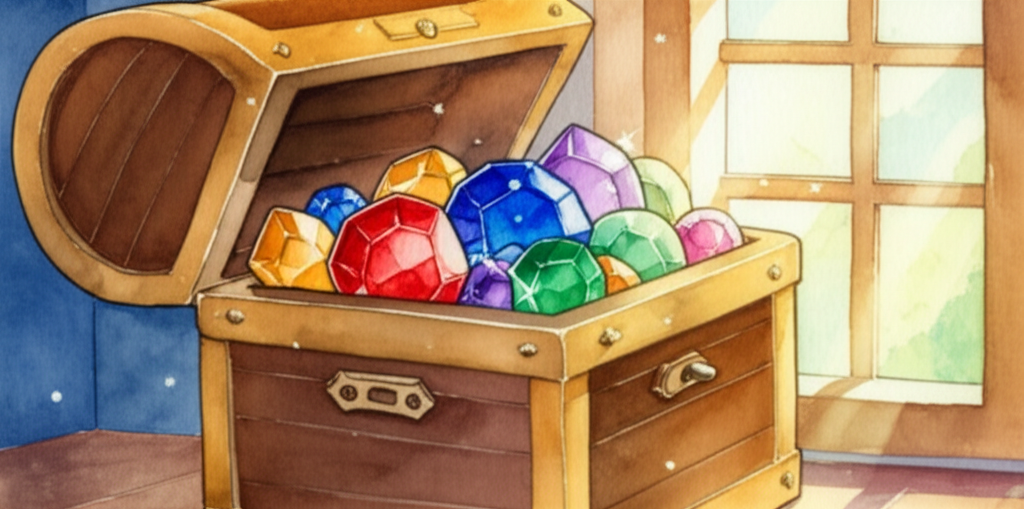
鉱物の色は、主に①含まれる元素、②不純物、③構造色で決まります。たとえば孔雀石が緑なのは銅など特定の元素の影響です。同じ鉱物でも、少し混じった不純物で色が変わることがあります。石英が紫になるアメジストは、微量の鉄などと放射線の影響で色の中心(欠陥)ができるためです。③構造色は、成分ではなく微細な層や粒の並びが光を干渉・散乱させて生まれる色で、オパールの虹色やラブラドライトの青い光(ラブラドレッセンス)が代表例です。
鉱物の見た目の色は、表面の風化や混ざり物で変わりやすいのに対し、条痕色は「粉にしたときの色」です。素焼き板にこすりつけて調べ、鉱物本来の色が出やすいので同定に役立ちます。たとえば黄鉄鉱は金色に見えますが条痕は黒っぽく、金は黄色い条痕が出ます。
光沢は、表面での光の反射のしかたです。ガラス光沢は石英のようにガラスに似た反射、金属光沢は黄鉄鉱や方鉛鉱のように金属のように強く光ります。真珠光沢は雲母や一部の方解石に見られ、内側からにじむような光が特徴です。ほかに脂(し)光沢、絹糸光沢などもあります。透明度は光が通るかどうかで、透明(文字が読める)、半透明(光は通るが形はぼやける)、不透明(通らない)に分けます。
特殊な光学特性として、多色性があります。これは見る方向で色が変わる性質で、結晶の中で光の進み方が方向によって違うため起こります(例:トルマリン)。蛍光は、紫外線を当てると別の色の光を出す現象で、方解石や蛍石が有名です。
【ゲームでの活用】金属光沢の鉱物を高レアにするのは、現実でも金属光沢が強い鉱物が目立ちやすく「特別感」を出しやすい点と相性が良い設定です。ダイヤモンド光沢(非常に強い光沢)は高い屈折率による鋭いきらめきが原因で、最高レアの表現に向きます。蛍光性を「光属性スキル」に結びつけるのも、紫外線で光るという実際の性質に基づいています。透明度が高いほど内部まで光が通り、見た目が澄んで強い輝きを作れるため、「魔法攻撃力が高い」演出にも自然につながります。
鉱物の見た目の色は、表面の風化や混ざり物で変わりやすいのに対し、条痕色は「粉にしたときの色」です。素焼き板にこすりつけて調べ、鉱物本来の色が出やすいので同定に役立ちます。たとえば黄鉄鉱は金色に見えますが条痕は黒っぽく、金は黄色い条痕が出ます。
光沢は、表面での光の反射のしかたです。ガラス光沢は石英のようにガラスに似た反射、金属光沢は黄鉄鉱や方鉛鉱のように金属のように強く光ります。真珠光沢は雲母や一部の方解石に見られ、内側からにじむような光が特徴です。ほかに脂(し)光沢、絹糸光沢などもあります。透明度は光が通るかどうかで、透明(文字が読める)、半透明(光は通るが形はぼやける)、不透明(通らない)に分けます。
特殊な光学特性として、多色性があります。これは見る方向で色が変わる性質で、結晶の中で光の進み方が方向によって違うため起こります(例:トルマリン)。蛍光は、紫外線を当てると別の色の光を出す現象で、方解石や蛍石が有名です。
【ゲームでの活用】金属光沢の鉱物を高レアにするのは、現実でも金属光沢が強い鉱物が目立ちやすく「特別感」を出しやすい点と相性が良い設定です。ダイヤモンド光沢(非常に強い光沢)は高い屈折率による鋭いきらめきが原因で、最高レアの表現に向きます。蛍光性を「光属性スキル」に結びつけるのも、紫外線で光るという実際の性質に基づいています。透明度が高いほど内部まで光が通り、見た目が澄んで強い輝きを作れるため、「魔法攻撃力が高い」演出にも自然につながります。
A mineral's color is determined by three main factors: (1) the elements it contains, (2) impurities, and (3) structural color. Malachite is green because of copper; amethyst is purple quartz colored by trace iron and radiation effects. Structural color comes from microscopic layers causing light interference — like opal's rainbow play-of-color and labradorite's blue flash (labradorescence).
A mineral's surface color can change from weathering, but streak color (the powder color when rubbed on unglazed porcelain) reveals the true color. Pyrite looks golden but has a dark streak, while real gold has a yellow streak.
Luster describes how light reflects off the surface. Vitreous (glassy) luster is seen in quartz; metallic luster in pyrite and galena; pearly luster in mica. Other types include greasy and silky luster. Transparency ranges from transparent (can read through it), to translucent (light passes but shapes blur), to opaque (no light passes).
Special properties include pleochroism (color changes with viewing direction, as in tourmaline) and fluorescence (glowing under UV light, as in calcite and fluorite).
In the Game: Metallic luster minerals being high-rarity fits their naturally eye-catching appearance. Adamantine luster (extremely strong shine from high refractive index) suits the highest rarity tier. Fluorescence ties naturally to "light-attribute skills," and high transparency linking to "high magic attack power" makes intuitive sense — light passing through creates brilliance.
A mineral's surface color can change from weathering, but streak color (the powder color when rubbed on unglazed porcelain) reveals the true color. Pyrite looks golden but has a dark streak, while real gold has a yellow streak.
Luster describes how light reflects off the surface. Vitreous (glassy) luster is seen in quartz; metallic luster in pyrite and galena; pearly luster in mica. Other types include greasy and silky luster. Transparency ranges from transparent (can read through it), to translucent (light passes but shapes blur), to opaque (no light passes).
Special properties include pleochroism (color changes with viewing direction, as in tourmaline) and fluorescence (glowing under UV light, as in calcite and fluorite).
In the Game: Metallic luster minerals being high-rarity fits their naturally eye-catching appearance. Adamantine luster (extremely strong shine from high refractive index) suits the highest rarity tier. Fluorescence ties naturally to "light-attribute skills," and high transparency linking to "high magic attack power" makes intuitive sense — light passing through creates brilliance.
劈開と断口
Cleavage & Fracture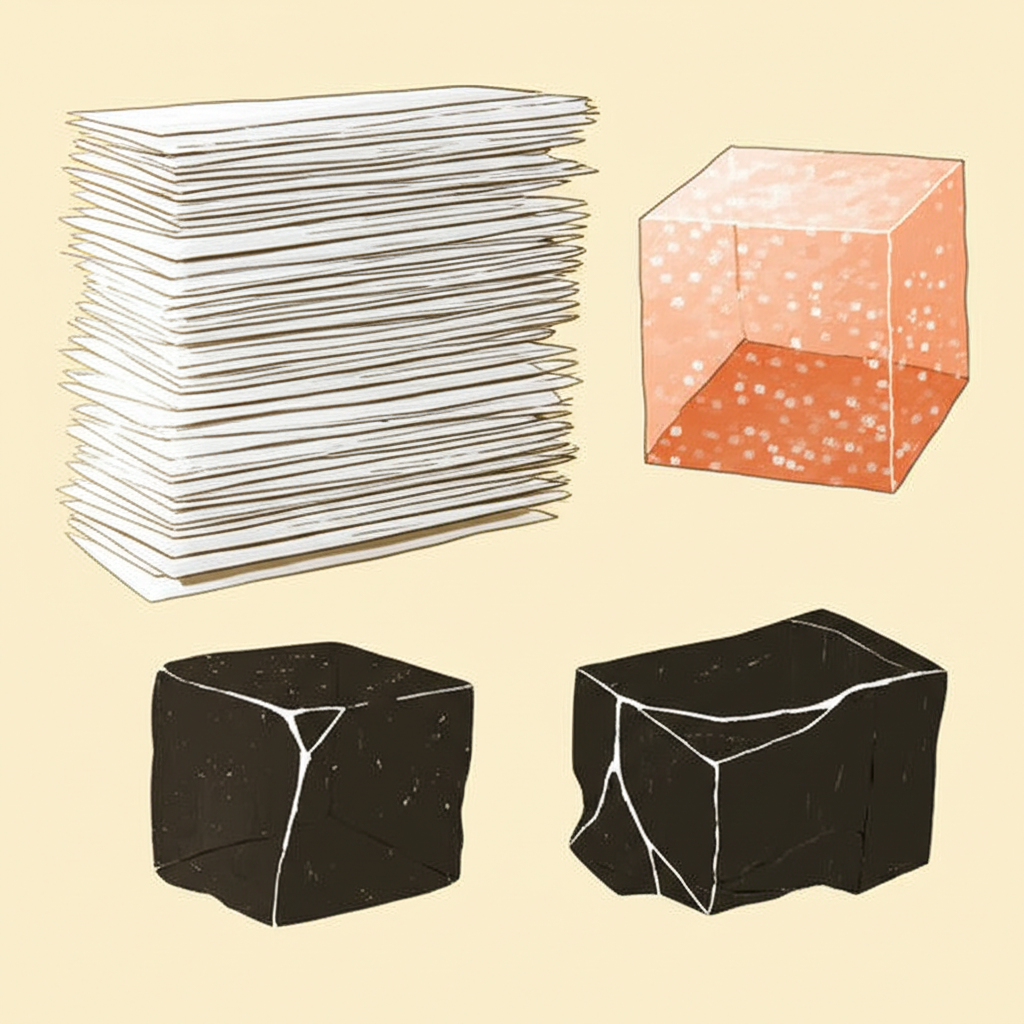
鉱物には、特定の方向に割れやすい性質と、そうでない性質があります。割れやすい方向に沿って、まるでナイフで切ったようにきれいに割れることを「劈開(へきかい)」といいます。これは、鉱物の結晶構造が関係していて、原子の結びつきが弱い面がある場合に、その面に沿って割れやすくなるからです。
劈開には、割れる方向の数があります。例えば、雲母(うんも)は、薄い板状に1方向に綺麗に剥がれます。方解石(ほうかいせき)は、3方向に割れやすく、割れた面が平行四辺形になります。このように、劈開の方向の数と、割れる面の角度は、鉱物によって決まっています。
一方、「断口(だんこう)」は、劈開のように特定の方向に割れるのではなく、不規則に割れることをいいます。ハンマーで叩き割った石をイメージすると分かりやすいでしょう。
断口の種類には、貝殻のような模様になる「貝殻状断口(かいがらじょうだんこう)」や、表面がザラザラした「不平坦断口(ふへいたんだんこう)」などがあります。石英(せきえい)は、叩き割ると貝殻状断口になりやすい鉱物です。
まとめると、鉱物の割れ方には、結晶構造に沿って綺麗に割れる「劈開」と、不規則に割れる「断口」があり、それぞれに特徴的な方向や形があります。これらの性質は、鉱物を区別する上で重要な手がかりになります。
劈開には、割れる方向の数があります。例えば、雲母(うんも)は、薄い板状に1方向に綺麗に剥がれます。方解石(ほうかいせき)は、3方向に割れやすく、割れた面が平行四辺形になります。このように、劈開の方向の数と、割れる面の角度は、鉱物によって決まっています。
一方、「断口(だんこう)」は、劈開のように特定の方向に割れるのではなく、不規則に割れることをいいます。ハンマーで叩き割った石をイメージすると分かりやすいでしょう。
断口の種類には、貝殻のような模様になる「貝殻状断口(かいがらじょうだんこう)」や、表面がザラザラした「不平坦断口(ふへいたんだんこう)」などがあります。石英(せきえい)は、叩き割ると貝殻状断口になりやすい鉱物です。
まとめると、鉱物の割れ方には、結晶構造に沿って綺麗に割れる「劈開」と、不規則に割れる「断口」があり、それぞれに特徴的な方向や形があります。これらの性質は、鉱物を区別する上で重要な手がかりになります。
Minerals have certain directions along which they break easily and others where they do not. When a mineral splits cleanly along a specific direction — almost as if cut with a knife — this is called "cleavage." Cleavage is related to crystal structure: where atomic bonds are weaker along a certain plane, the mineral breaks along that plane.
Cleavage is described by the number of directions. Mica splits into thin sheets along a single direction. Calcite breaks along three directions, producing parallelogram-shaped fragments. The number of cleavage directions and angles between them are specific to each mineral.
"Fracture" is the way a mineral breaks when it does not split along a cleavage plane — it breaks irregularly. Imagine smashing a rock with a hammer.
Types of fracture include "conchoidal fracture" (smooth, curved surfaces like the inside of a seashell) and "uneven fracture" (rough, irregular surfaces). Quartz typically shows conchoidal fracture when struck.
In summary, minerals break in two main ways: cleavage (clean, flat surfaces along crystal structure planes) and fracture (irregular breaks). These properties are important clues for identifying minerals.
Cleavage is described by the number of directions. Mica splits into thin sheets along a single direction. Calcite breaks along three directions, producing parallelogram-shaped fragments. The number of cleavage directions and angles between them are specific to each mineral.
"Fracture" is the way a mineral breaks when it does not split along a cleavage plane — it breaks irregularly. Imagine smashing a rock with a hammer.
Types of fracture include "conchoidal fracture" (smooth, curved surfaces like the inside of a seashell) and "uneven fracture" (rough, irregular surfaces). Quartz typically shows conchoidal fracture when struck.
In summary, minerals break in two main ways: cleavage (clean, flat surfaces along crystal structure planes) and fracture (irregular breaks). These properties are important clues for identifying minerals.
岩石タイプと共生
Rock Types & Paragenesis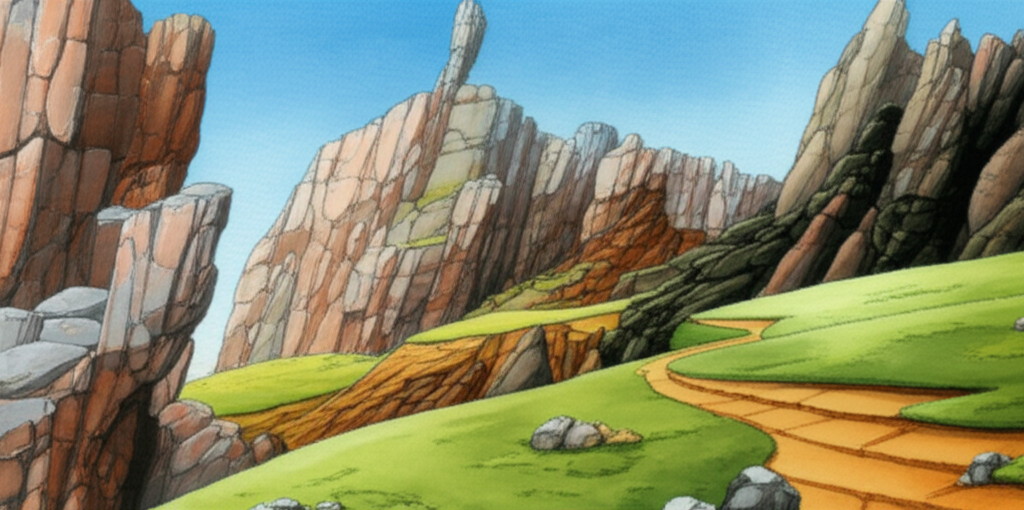
岩石はでき方で大きく「火成岩・堆積岩・変成岩」の3つに分かれます。火成岩は、マグマ(地下の高温のどろどろ)が冷えて固まった岩石です。ゆっくり冷えると大きな結晶が育ち、代表例が花崗岩(かこうがん)です。花崗岩には石英・長石・雲母がよく一緒に入ります。逆に、地表近くで急に冷えると結晶が小さくなり、代表例が玄武岩(げんぶがん)です。玄武岩はかんらん石・輝石・斜長石などが多く、黒っぽい色になりやすいです。堆積岩は、砂や泥、貝殻のかけらなどが水や風で運ばれて積もり、押し固められてできた岩石で、砂岩や泥岩、石灰岩が代表です。変成岩は、もともとの岩石が地下で高温・高圧を受けて、鉱物の組み合わせや並び方が変わってできた岩石で、片麻岩や結晶片岩などがあります。
「共生関係」とは、同じ温度・圧力・化学成分などの環境で"いっしょに安定してできる"鉱物の組み合わせのことです。たとえば花崗岩では、石英・長石・雲母が同じマグマから結晶化しやすく、自然界でも同じ岩石の中に並んで産出します。玄武岩なら、マグマの成分が鉄やマグネシウムに富むため、輝石やかんらん石などが共生しやすい、という具合です。
スカルンは少し特別で、石灰岩などがマグマの熱い水溶液(熱水)と反応してできる「接触変成・交代作用」の岩石です。この環境では、灰鉄輝石(かいてつきせき)・柘榴石(ざくろいし)・磁鉄鉱(じてっこう)などが共生しやすく、鉄や銅などの鉱床と結びつくこともあります。ゲームの「同じ岩石タイプで鉱物を揃えると共生ボーナス」は、まさに自然界の"よく一緒にできる組み合わせ"を再現したものです。岩石タイプ=できた環境を意識すると、なぜその鉱物が同じチームに向くのかが理解でき、学びながら強い編成を考えられます。
「共生関係」とは、同じ温度・圧力・化学成分などの環境で"いっしょに安定してできる"鉱物の組み合わせのことです。たとえば花崗岩では、石英・長石・雲母が同じマグマから結晶化しやすく、自然界でも同じ岩石の中に並んで産出します。玄武岩なら、マグマの成分が鉄やマグネシウムに富むため、輝石やかんらん石などが共生しやすい、という具合です。
スカルンは少し特別で、石灰岩などがマグマの熱い水溶液(熱水)と反応してできる「接触変成・交代作用」の岩石です。この環境では、灰鉄輝石(かいてつきせき)・柘榴石(ざくろいし)・磁鉄鉱(じてっこう)などが共生しやすく、鉄や銅などの鉱床と結びつくこともあります。ゲームの「同じ岩石タイプで鉱物を揃えると共生ボーナス」は、まさに自然界の"よく一緒にできる組み合わせ"を再現したものです。岩石タイプ=できた環境を意識すると、なぜその鉱物が同じチームに向くのかが理解でき、学びながら強い編成を考えられます。
Rocks are divided into three major groups based on how they formed: igneous, sedimentary, and metamorphic. Igneous rocks form when magma cools and solidifies. Slow cooling produces large crystals (granite: quartz, feldspar, mica). Fast cooling produces small crystals (basalt: olivine, pyroxene, plagioclase). Sedimentary rocks form from deposited and compacted sand, mud, or shells (sandstone, mudstone, limestone). Metamorphic rocks form when existing rocks are transformed by high temperature and pressure (gneiss, schist).
"Paragenesis" refers to minerals that form together because they are stable under the same conditions. In granite, quartz, feldspar, and mica crystallize from the same magma and are found side by side. In basalt, iron- and magnesium-rich magma produces pyroxene and olivine together.
Skarn is a special case — it forms when limestone reacts with hot magma-derived fluids through contact metamorphism. Minerals like hedenbergite, garnet, and magnetite commonly occur together in skarns, sometimes associated with iron and copper ore deposits.
In the Game: The "paragenesis bonus for matching rock types" directly reflects these real-world mineral associations. When you think of rock type as the environment where minerals formed, it becomes clear why certain minerals make good teammates — and you can build stronger teams while learning real geology at the same time.
"Paragenesis" refers to minerals that form together because they are stable under the same conditions. In granite, quartz, feldspar, and mica crystallize from the same magma and are found side by side. In basalt, iron- and magnesium-rich magma produces pyroxene and olivine together.
Skarn is a special case — it forms when limestone reacts with hot magma-derived fluids through contact metamorphism. Minerals like hedenbergite, garnet, and magnetite commonly occur together in skarns, sometimes associated with iron and copper ore deposits.
In the Game: The "paragenesis bonus for matching rock types" directly reflects these real-world mineral associations. When you think of rock type as the environment where minerals formed, it becomes clear why certain minerals make good teammates — and you can build stronger teams while learning real geology at the same time.